Different agents, different strengths
I use Codex and Claude for different parts of a problem, then get them to challenge and cross-check each other's work instead of trusting whichever answer arrives first.
Physical AI · Perception · Real-time systems
I want to build physical AI that people will actually use, starting with what operators and markets need and combining robust perception, safe state-aware behaviour, efficient inference, and fleet orchestration to make robotics useful, affordable, and ready to scale.
Technical work with a reason to exist
I am interested in model capability, but also in what determines whether that capability becomes reliable, economical, and valuable in a real operation.
Better geometry and persistent state reduce ambiguity for planning, safety, and manipulation, which also reduces the cost of failures caused by incomplete scene understanding.
Batching, routing, selective computation, and memory-aware execution are what make larger models practical under real response-time and hardware constraints.
Robot utilisation, idle time, failure recovery, and the usefulness of generated data determine whether a technically capable system delivers value at scale.
Augment judgement, preserve accountability
I care a lot about using AI intelligently and responsibly. I use complementary agents, durable project context, explicit verification, and scheduled experiment monitoring because moving faster only matters if the work still holds up.
I use Codex and Claude for different parts of a problem, then get them to challenge and cross-check each other's work instead of trusting whichever answer arrives first.
I check claims against source files, logs, experiment results, and reproducible tests. If two agents disagree, I want that disagreement surfaced rather than quietly smoothed over.
I keep structured project records, handoffs, and status files so decisions don't disappear when a chat ends, which really matters when research runs across weeks or months.
I pair long-running RL training with scheduled agent check-ins that inspect progress, flag failures, and preserve results outside working hours, including weekends, while bringing decisions that need a person back to me.
Work in development
These are active directions rather than finished claims: policy robustness, an independent safety layer, and the orchestration needed for large deployments.
Developing a simulation-first pipeline that trains robot policies across varied terrain, object textures, and lighting. The generalised model is paired with batching and efficient serving strategies so larger models can operate within practical latency and compute limits.
Exploring a sim-first safety layer that retains state about vulnerable objects and constrains unsafe motion, even when an underlying task model proposes a trajectory that could collide with a person, pet, device, or fragile object.
Designing an orchestration layer that connects task allocation with analysis of robot-generated data and outputs, so factory deployments can be coordinated and improved as a system rather than as isolated machines.
Research translated into systems
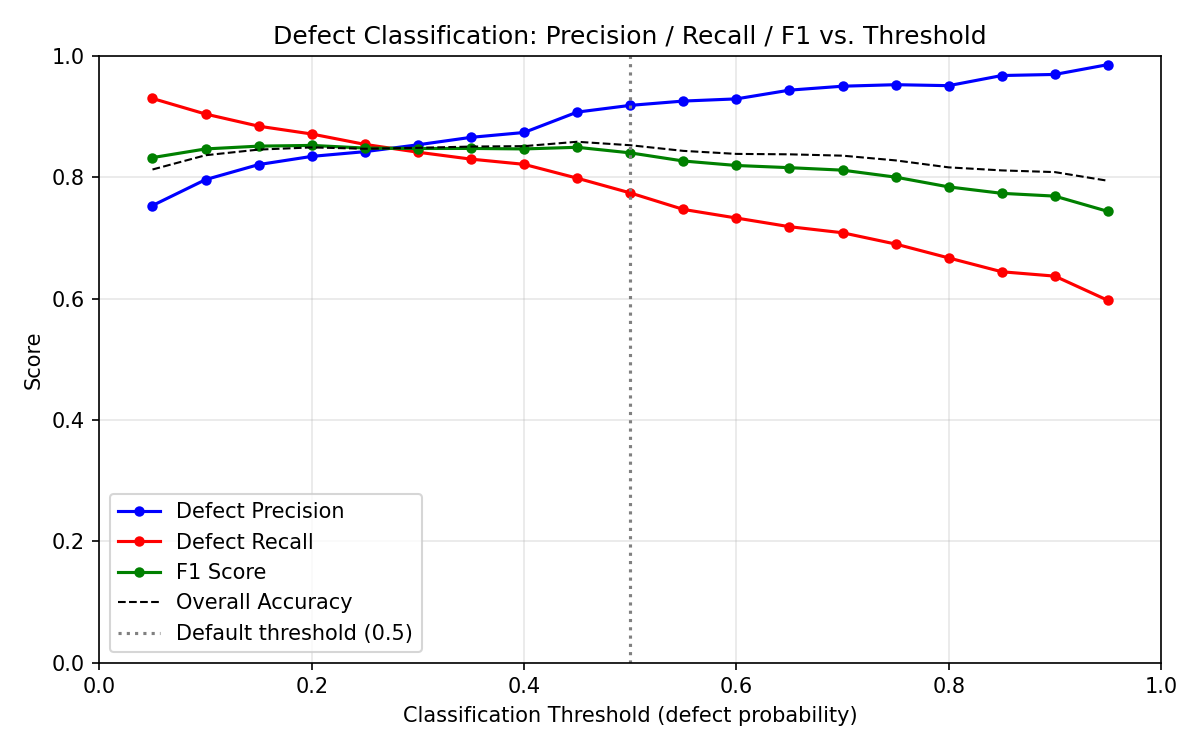
Built and deployed PCB-defect classification and ADAS detection on a Xilinx ZCU104, including a custom Verilog 3×3 convolution accelerator, INT8 quantisation, and confidence recalibration.
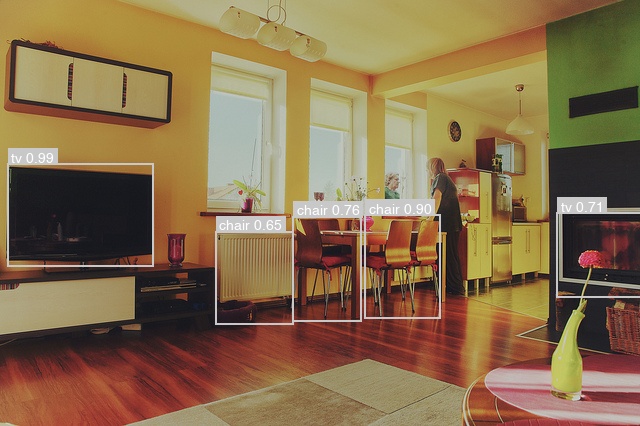
Replacing a camera-based probabilistic initializer with fixed-size LiDAR anchors while preserving the downstream Gaussian representation. Current work is focused on real-data validation and a controlled baseline.

Developing and evaluating VLA, imitation-learning, reinforcement-learning, and motion-retargeting workflows across UR5/UR5e, Unitree G1, and RoboParty V1, supported by ROS 2 control paths, simulation infrastructure, calibration, trajectory auditing, and safe teleoperation.
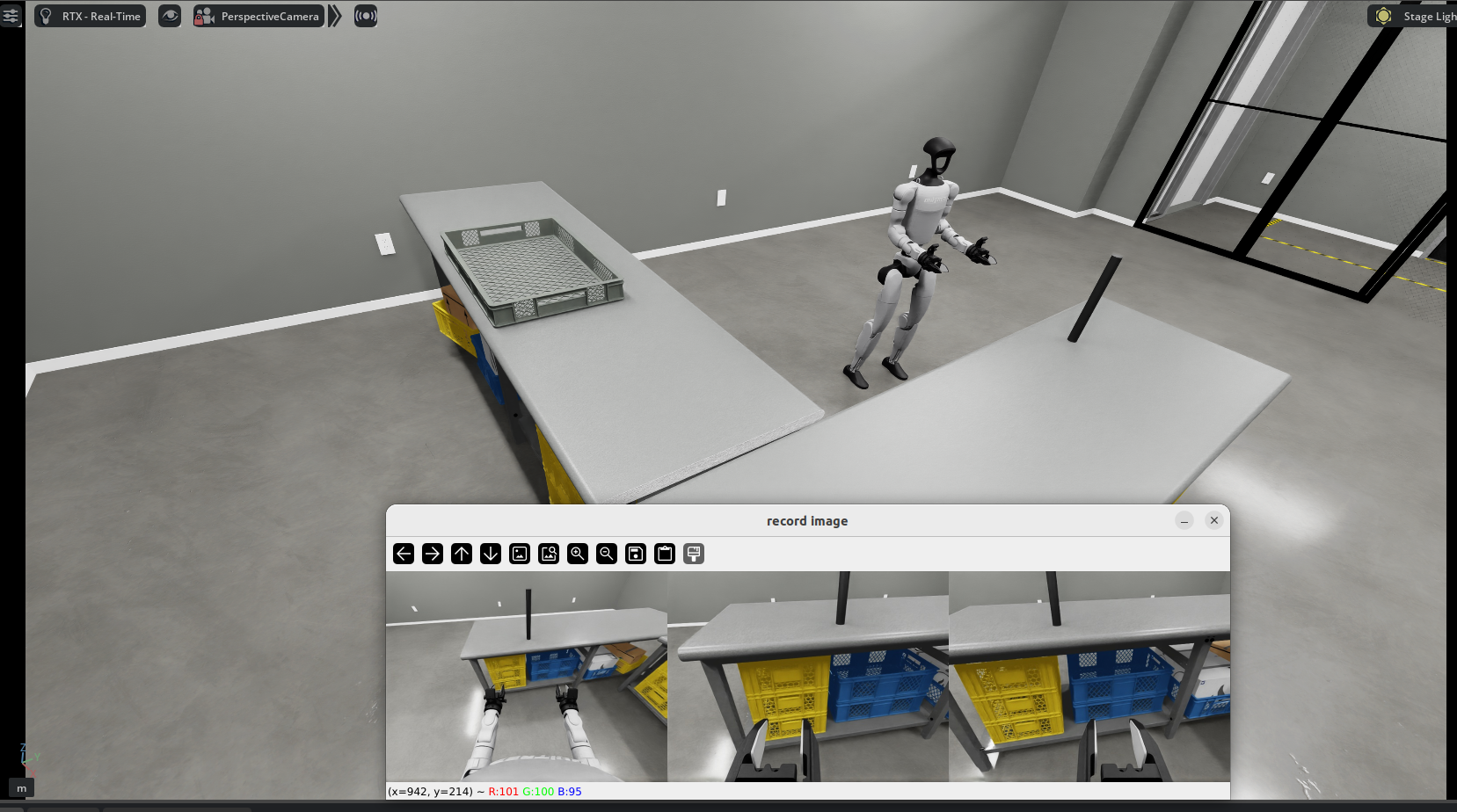
A dual-path teleoperation stack combining open-source GELLO hardware with browser-based SpaceMouse input through WebHID, rosbridge, and MoveIt 2 Servo, including a yaw-only constraint.
Technical depth + commercial context
My technical work is complemented by business-development and product experience, which shapes how I evaluate usefulness, adoption, and scale.
VLA evaluation, robot-learning infrastructure, calibration, teleoperation, and real-hardware deployment within the Intelligent Perception & 3D team.
LiDAR initialization for 3D Gaussian scene representations under Prof. Tay Wee Peng, working with Dr. Loo Junn Yong.
Industry partnerships and applied-AI initiatives with NVIDIA, Micron, and collaborators.
Led an AI analytics product, built event-to-price data pipelines, and analysed 20+ competitors to shape positioning and execution.
Deployment-aware edge-vision research with Dr. Loo Xi Sung, culminating in the IEEE ICIEA 2026 paper below.
IEEE ICIEA 2026 · Catania, Italy
Completed through URECA Year 2, the work covers classification, detection, custom hardware acceleration, quantisation, and confidence recalibration under measured performance and energy constraints.